Pamukkale Photography Masterclass Guide 2025: Advanced Techniques for Capturing the Cotton Castle
In the realm of landscape photography, few destinations present both the extraordinary beauty and unique technical challenges of Pamukkale's travertine terraces. These white calcium cascades, sculpted by thermal springs over millennia, create a photographer's paradise where every angle offers potential magic—yet success demands understanding the interplay between harsh Mediterranean light, reflective surfaces, and the constant movement of visitors through this living geological wonder.
Beyond simple snapshot photography lies a world of creative possibility where technical mastery meets artistic vision. The photographer who understands Pamukkale's rhythms—how light transforms these terraces throughout the day, where the most compelling compositions hide, and how to balance the pristine natural beauty with authentic human experience—discovers opportunities to create images that transcend typical travel photography and capture the soul of this remarkable place.
📸 Photography Quick Reference
- Optimal Times: 6:24-8:00 AM (sunrise), 6:00-7:48 PM (golden hour/sunset)
- Essential Gear: Wide-angle lens, tripod, polarizing filter, waterproof housing
- Best Entrances: North/South Gates for elevated perspectives
- Drone Rules: Restricted in UNESCO areas, permits required for commercial use
- Weather Considerations: Clear days ideal; embrace haze for mood shots
Understanding Light and Timing: The Foundation of Pamukkale Photography
Pamukkale's photographic success hinges on understanding how light interacts with calcium carbonate surfaces that function as enormous natural reflectors. Unlike typical landscape subjects that benefit from side-lighting or backlighting, these terraces require careful attention to reflection management and contrast control, creating technical challenges that reward photographers who master the unique conditions.
The Magic Hours: When Physics Meets Artistry
Early Morning (6:24-8:00 AM) provides the photographer's holy grail: minimal crowds combined with soft, directional light that reveals the terraces' three-dimensional structure without overwhelming reflections. The sun rises from behind the main terrace complex, creating a progression of lighting conditions that begins with dramatic silhouettes and evolves into balanced illumination that showcases both detail and form.
During these precious morning hours, thermal pools retain overnight warmth while the air remains cool, creating subtle steam effects that add ethereal quality to wide-angle compositions. The absence of crowds allows for clean compositions while the soft light prevents the harsh shadows and blown highlights that plague midday photography attempts.
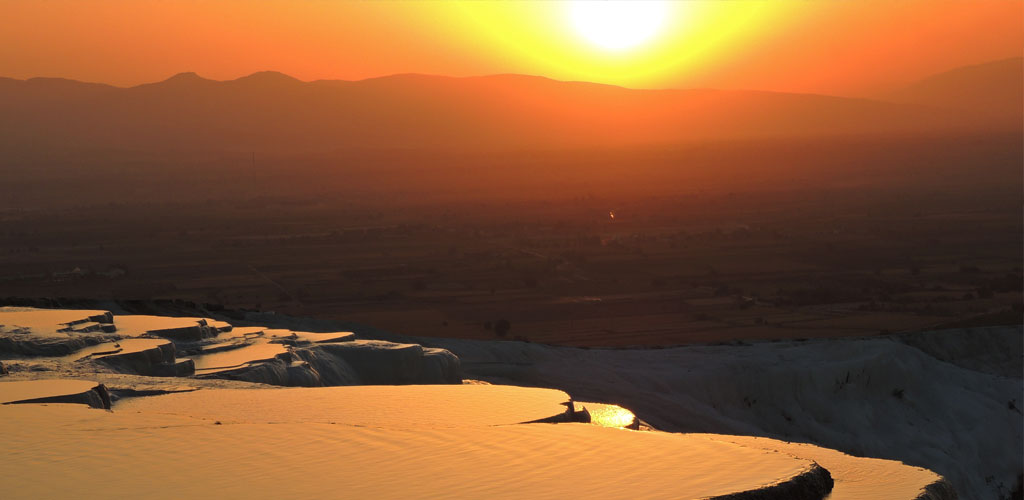
Golden Hour and Sunset (6:00-7:48 PM) transforms the white terraces into warm, glowing formations that seem to emit their own light. This period requires different technical approaches as the warm light creates color casts that can be embraced for mood or corrected for accuracy, depending on artistic intent. The challenge lies in balancing the bright sky with the reflective terraces while maintaining detail in both areas.
🌅 Timing Strategy for Advanced Photographers
Pre-sunrise Setup: Arrive 30 minutes before sunrise for blue hour shots and crowd-free positioning. Best access via North Gate for elevated perspectives.
Light Progression: Dawn (blue hour), sunrise (silhouettes), early morning (balanced), late morning (harsh), golden hour (warm), sunset (dramatic).
Weather Advantage: Overcast days provide massive softbox effect, eliminating harsh shadows and creating even lighting for detail photography.
Technical Mastery: Equipment and Settings for Exceptional Results
Pamukkale's unique environment demands specific technical approaches that differ significantly from conventional landscape photography. The combination of intense reflected light, wet surfaces, and mineral-rich water creates challenges that can destroy equipment or degrade image quality unless properly managed through preparation and technique.
Essential Equipment for Pamukkale Photography
Wide-Angle Lens (14-35mm) is absolutely essential for capturing the sweeping scale of the travertine formations. The terraces' vast expanse demands ultra-wide perspectives to convey their impressive scope, while the elevated shooting positions available from the North and South entrances provide opportunities for dramatic compositions that showcase the complete geological feature.
Polarizing Filter becomes crucial equipment for managing the intense reflections from wet calcium surfaces. A circular polarizing filter allows control over reflection intensity, sky contrast, and color saturation while protecting the front lens element from mineral-rich water spray. Rotate the filter while observing the viewfinder to find optimal reflection reduction without completely eliminating water surface detail.
Sturdy Tripod enables the long exposures necessary for smooth water effects and sharp landscape details in low light conditions. Choose carbon fiber models that resist corrosion from mineral-rich environments while providing stability in windy conditions common on elevated terrace areas. Rinse tripod legs with fresh water after each shooting session to prevent mineral buildup.
Waterproof Protection for camera bodies and lenses protects expensive equipment from thermal spring mist and mineral deposits that can damage electronic components. Professional waterproof housings allow underwater thermal pool photography, while rain covers provide sufficient protection for above-water shooting in misty conditions.
⚙️ Advanced Technical Settings
Exposure Strategy: Meter for highlights, recover shadows in post. Travertines easily blow out; expose right without clipping.
Focus Technique: Hyperfocal distance for landscape sharpness. Use live view magnification for precise focus on textured surfaces.
White Balance: Custom WB using gray card in mixed lighting. Auto WB struggles with reflective surfaces and colored thermal water.
ISO Management: Keep ISO 100-400 for optimal dynamic range. Higher ISOs acceptable for handheld crowd-avoidance shots.
Advanced Camera Settings and Techniques
Exposure Compensation and Metering require careful attention when photographing highly reflective white surfaces that can fool camera meters into significant underexposure. Use spot metering on mid-tone areas (gray rocks, vegetation) rather than the brilliant white terraces, then dial in +1 to +2 stops of exposure compensation to maintain detail in the calcium formations without blown highlights.
Focus Stacking Techniques become valuable for maximizing sharpness across the complex three-dimensional terrace landscape. The intricate detail of calcium formations combined with the need for sharp foreground and background elements makes focus stacking essential for large prints or detailed examination. Shoot multiple images at different focus distances, then blend in post-processing for exceptional sharpness throughout the frame.
Composition Mastery: Beyond Instagram Snapshots
While social media showcases Pamukkale's obvious beauty, masterful photography requires moving beyond the predictable viewpoints that dominate tourist photography. The most compelling images often emerge from careful observation of lesser-known perspectives, attention to foreground and background relationships, and patience to wait for optimal conditions that transform good compositions into extraordinary photographs.
Leading Lines and Natural Patterns
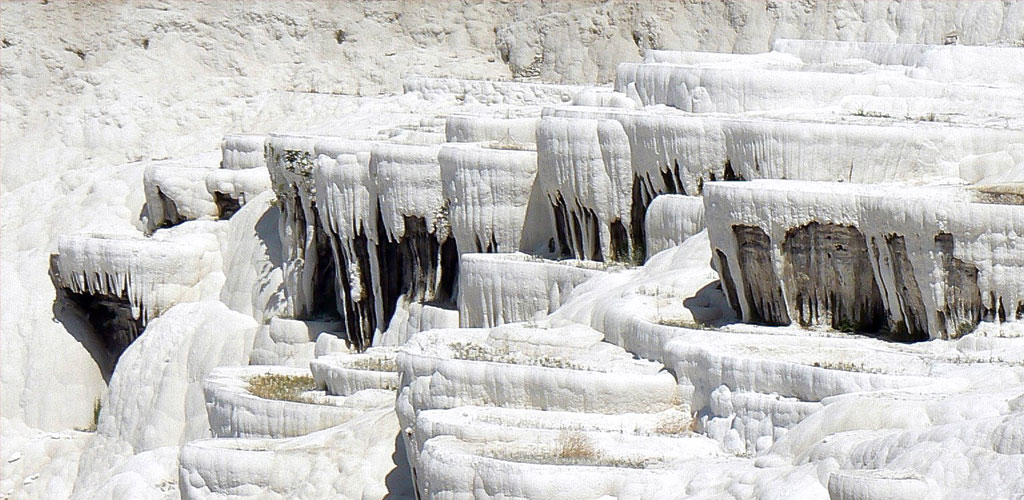
The terraces themselves create powerful natural leading lines that guide viewer attention through compositions toward focal points like distant mountains, ancient ruins, or carefully placed human subjects. Look for S-curves created by water flow, diagonal lines formed by terrace edges, and repetitive patterns that create rhythm and visual movement within the frame.
Water Flow Photography benefits from understanding seasonal variations in thermal spring output. Spring months provide maximum water flow that creates dramatic cascades between terraces, while summer months may reduce flow to subtle trickles that require different compositional approaches. Use long exposures (2-8 seconds) to smooth water movement while maintaining sharp detail in static elements.
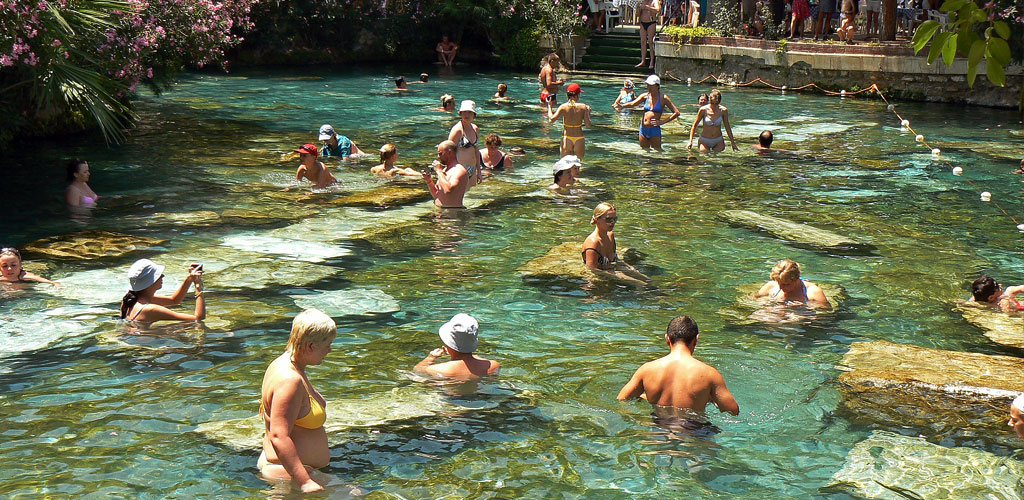
Scale and Perspective techniques help convey the enormous size of the travertine formation that often appears smaller in photographs than in reality. Include human figures for scale reference, use foreground elements to create depth, and shoot from elevated positions that reveal the complete scope of the geological feature extending toward the horizon.
🎨 Advanced Composition Techniques
Layered Composition: Use foreground terraces, middle-ground pools, background mountains for depth. Each layer should contribute to the story.
Pattern Recognition: Identify geometric patterns in calcium formations. Use repetition and variation to create visual rhythm.
Negative Space: White terraces provide natural negative space. Balance busy detailed areas with clean, simple surfaces.
Human Element: Include people for scale and story. Traditional Turkish dress adds cultural context and color contrast.
Alternative Perspectives and Hidden Viewpoints
Elevated Shooting Positions from the North and South entrances provide dramatically different perspectives than the standard tourist approach from Pamukkale village. These elevated positions allow photographers to capture the complete terrace system as a unified geological feature while providing clear sight lines to background mountains and valley landscapes.
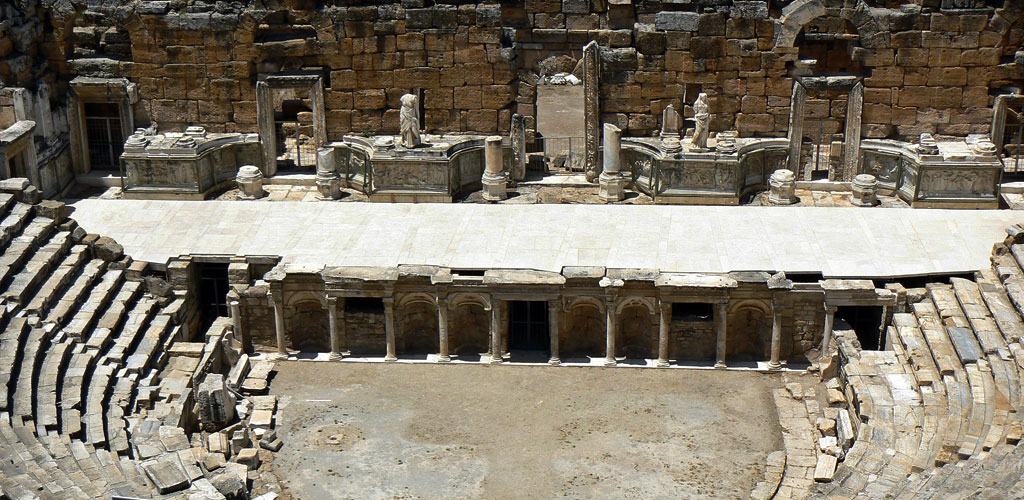
Hierapolis Integration combines ancient ruins with natural formations for compositions that tell the complete story of human interaction with this remarkable landscape. The ancient theater, necropolis, and temple foundations provide foreground elements that add historical context while the terraces create stunning backdrops for archaeological photography.
Reflection Photography in calm thermal pools creates mirror images that double visual impact while adding symmetry to compositions. Early morning conditions often provide the stillest water surfaces before wind and visitor activity disturb the reflective quality. Use polarizing filters judiciously—complete reflection elimination can appear unnatural.
Seasonal Photography Strategies
Pamukkale's appearance changes dramatically throughout the year, creating distinct photographic opportunities that reward visitors who understand seasonal variations. From spring's abundant water flow through summer's intense heat and winter's rare snow contrasts, each season presents unique challenges and opportunities for the prepared photographer.
Spring Photography (March-May)
Spring represents optimal conditions for Pamukkale photography, combining maximum water flow, moderate temperatures, and crisp atmospheric conditions that provide excellent visibility and color saturation. The increased thermal spring output creates dramatic cascades and fills more terrace pools, while wildflowers add color accents to the predominantly white landscape.
Temperature variations between cool air and warm thermal water create steam effects that add atmospheric quality to compositions. These conditions work particularly well for early morning photography when steam is most visible and creates ethereal moods that transform standard landscape shots into dreamy, impressionistic images.
Summer Adaptations (June-August)
Summer heat creates harsh lighting conditions that challenge conventional landscape photography approaches while opening opportunities for dramatic high-contrast imagery. The intense sunlight and clear skies create deep shadows and brilliant highlights that can be embraced for graphic, high-impact compositions rather than fought against through traditional techniques.
Heat haze becomes a creative element rather than a problem when embraced for its ability to soften distant elements and create layered atmospheric effects. Use telephoto lenses to compress perspective and emphasize heat shimmer effects that add visual interest to background elements.
🌦️ Weather and Seasonal Strategies
Spring Advantages: Maximum water flow, wildflowers, steam effects, optimal weather conditions for extended shooting sessions.
Summer Challenges: Harsh midday light, crowds, heat stress. Focus on early morning and late evening sessions.
Autumn Benefits: Clear skies, moderate temperatures, golden lighting. Excellent for sunset photography and clear mountain views.
Winter Opportunities: Rare snow contrast, minimal crowds, dramatic sky conditions. Bring cold weather protection for equipment.
Drone Photography: Regulations and Techniques
Aerial photography reveals Pamukkale's complete geological structure in ways impossible from ground level, but UNESCO World Heritage status and Turkish aviation regulations create specific legal requirements that must be understood before attempting drone operations. Successful aerial photography requires both technical competence and regulatory compliance.
Legal Requirements and Restrictions
UNESCO Protection Status limits drone operations within the official boundaries of the Pamukkale-Hierapolis World Heritage site. Commercial drone photography requires advance permits from Turkish aviation authorities, while recreational use faces restrictions designed to protect both the geological formation and visitor safety.
Flight Zone Restrictions extend beyond the immediate terrace area to include approach paths and surrounding areas that might affect aircraft operations at nearby airports. Check current NOTAM (Notice to Airmen) information and local restrictions that may change based on seasonal tourism patterns or security considerations.
Alternative Aerial Perspectives can be achieved from elevated ground positions that provide aerial-style views without regulatory complications. The hills surrounding Pamukkale offer shooting positions that create aerial-like perspectives using telephoto lenses while remaining within standard photography regulations.
Advanced Aerial Composition Techniques
When drone operations are legally permitted, Pamukkale offers exceptional opportunities for aerial photography that reveals the complete scale and pattern of the travertine formation. The geometric precision of the terraces becomes most apparent from directly overhead, creating abstract compositions that emphasize pattern and texture over conventional landscape elements.
Pattern and Texture Photography from aerial perspectives transforms the familiar landscape into abstract art, where the calcium formations create geometric patterns that rival human architectural achievements. Shoot directly downward to emphasize these patterns while using consistent lighting to reveal subtle texture variations across the white surface.
🚁 Drone Operations Guide
Permit Requirements: Commercial use requires Turkish aviation authority permits. Recreational use heavily restricted in UNESCO areas.
Safety Protocol: Maintain visual line of sight. Avoid flights over crowds. Respect 50-meter minimum distance from people and structures.
Technical Settings: Manual exposure essential. ND filters for motion blur. RAW capture for maximum post-processing flexibility.
Alternative Options: Ground-based elevated positions provide aerial-style perspectives without regulatory complications.
Instagram vs Reality: Managing Expectations and Authenticity
Social media's portrayal of Pamukkale often creates unrealistic expectations that can disappoint visitors unprepared for the reality of a heavily visited natural site with practical limitations and environmental changes. Understanding these differences enhances photography by encouraging realistic planning and authentic representation.
The Reality of Modern Pamukkale
Water Level Realities differ significantly from historical photographs and social media portrayals that may show conditions from decades past or carefully selected moments of peak water flow. Modern conservation efforts and increased tourism have reduced water levels in many terraces, while environmental management restricts access to preserve the formation's integrity.
Crowd Management becomes essential for photographers seeking clean compositions, as peak visiting hours can fill popular viewpoints with hundreds of visitors simultaneously. The most dramatic Instagram shots typically result from very early morning or late evening sessions when most tour groups have departed.
Seasonal Variations affect water levels, accessibility, and visual impact in ways that social media posts rarely acknowledge. Spring photographs may show dramatically different conditions than summer or winter visits, making timing crucial for photographers expecting specific visual results.
Creating Authentic yet Compelling Images
Embracing Imperfection often produces more honest and ultimately more compelling photographs than attempting to recreate idealized social media portrayals. Including evidence of human presence, showing realistic water levels, and documenting actual conditions creates images with greater authenticity and educational value.
Technical Honesty in post-processing maintains credibility while enhancing natural beauty. Avoid extreme saturation boosts, unrealistic color shifts, or composite techniques that misrepresent actual conditions. Enhancement should reveal natural beauty rather than create artificial perfection.
📱 Social Media Reality Check
Water Levels: Only 5% of terraces typically have significant water. Don't expect infinity pool effects throughout.
Crowd Reality: Peak hours (10 AM-4 PM) bring hundreds of visitors. Early morning essential for clean shots.
Color Truth: Natural terraces are brilliant white, not blue. Blue tints come from sky reflections or editing.
Access Limits: Many formations are protected and inaccessible. Respect barriers designed to preserve the site.
Post-Processing Techniques for Pamukkale Images
Pamukkale's unique visual characteristics require specific post-processing approaches that enhance natural beauty while maintaining realistic representation. The combination of brilliant white surfaces, colored thermal water, and complex lighting conditions creates editing challenges that reward photographers who understand color theory and exposure management.
Managing White Balance and Color Casts
White Balance Complexity arises from mixed lighting conditions where reflected skylight, direct sunlight, and thermal water create different color temperatures within single compositions. Custom white balance using gray cards provides more accurate starting points than auto white balance, which often struggles with highly reflective surfaces.
Selective Color Adjustment allows enhancement of the subtle blue tints in thermal water while maintaining accurate white balance in calcium formations. Use luminosity masks or color range selections to isolate different tonal areas for independent color correction without affecting the entire image.
Dynamic Range and Exposure Optimization
Highlight Recovery becomes essential when photographing brilliant white terraces that easily exceed camera dynamic range capabilities. Expose for highlights to prevent clipping, then recover shadow detail in post-processing. Raw capture provides maximum flexibility for exposure adjustment without quality degradation.
Local Adjustments through masking and graduated filters help balance exposure differences between bright terraces and darker surrounding elements. Careful masking prevents haloing effects while allowing independent optimization of different tonal areas within complex compositions.
🎛️ Post-Processing Workflow
RAW Processing: Expose right without clipping. Recover shadows. Careful highlight rolloff to prevent pure white blow-outs.
Color Grading: Enhance natural blue water tints. Maintain neutral white terraces. Warm golden hour enhancement.
Local Adjustments: Luminosity masking for selective enhancement. Graduated filters for sky balance.
Sharpening: Capture sharpening for texture detail. Output sharpening for intended viewing size.
Cultural Sensitivity and Photography Ethics
Photography at Pamukkale requires balance between artistic expression and cultural respect, as the site holds deep significance for Turkish culture while hosting international visitors with varying customs and comfort levels regarding photography. Understanding these dynamics enhances the photography experience while ensuring positive interactions with local communities and fellow travelers.
Respecting Turkish Cultural Values
Religious and Cultural Considerations affect photography involving local visitors, particularly during prayer times or religious holidays when cultural sensitivity becomes especially important. Turkish families often visit Pamukkale for religious or cultural reasons that may not align with Western tourism photography expectations.
Permission and Privacy protocols should guide interactions with local people, as Turkish culture values privacy and family dignity. Always ask permission before photographing local families, and be prepared to accept refusal graciously. Offering to share images can build positive relationships and cultural exchange opportunities.
Environmental Responsibility
Leave No Trace Principles apply especially to fragile travertine formations that can be damaged by footsteps, equipment placement, or chemical contamination from sunscreens and cosmetics. Stick to designated pathways and avoid placing tripods directly on calcium formations that may appear solid but can be quite fragile.
Conservation Awareness should influence photography practices and post-processing choices that represent Pamukkale accurately rather than encouraging behaviors that might damage this UNESCO World Heritage site. Avoid promoting restricted access or unsafe practices through image content or captions.
🤝 Cultural Photography Ethics
Permission Protocol: Always ask before photographing people. "Fotoğraf çekebilir miyim?" (May I take a photo?)
Cultural Sensitivity: Respect religious practices and family privacy. Turkish culture values dignity and appropriate behavior.
Environmental Respect: Follow designated paths. Protect fragile formations. Clean equipment to prevent contamination.
Representation Honesty: Showcase authentic conditions. Avoid promoting unsafe or restricted access through photography.
Equipment Protection and Maintenance
Pamukkale's mineral-rich thermal environment poses specific threats to photography equipment that require proactive protection and maintenance strategies. The combination of calcium-rich water, high humidity, and temperature variations can damage expensive camera gear unless properly managed through preparation and post-session care.
Environmental Challenges and Solutions
Mineral Contamination from thermal spring mist can build up on lens surfaces, camera bodies, and tripod mechanisms, causing corrosion and mechanical failure if not addressed promptly. Bring lens cleaning cloths, isopropyl alcohol wipes, and protective covers that can be quickly deployed when conditions warrant.
Temperature and Humidity Management becomes crucial when moving between air-conditioned accommodations and hot, humid outdoor conditions that can cause condensation inside camera bodies and lenses. Allow equipment to acclimate gradually and use silica gel packets in camera bags to control humidity.
Post-Session Equipment Care
Cleaning Protocols should be implemented immediately after each photography session to prevent mineral buildup that can permanently damage equipment. Rinse tripod legs with fresh water, clean lens surfaces with appropriate solutions, and inspect camera bodies for mineral deposits that may interfere with controls or seals.
Backup Equipment Strategies provide insurance against equipment failure in harsh conditions far from camera repair facilities. Consider bringing backup camera bodies, extra batteries (thermal conditions drain power quickly), and alternative lens options that provide shooting flexibility if primary equipment fails.
Conclusion: Mastering Pamukkale Photography
Mastering Pamukkale photography requires integration of technical expertise, cultural sensitivity, and artistic vision that respects both the natural wonder and the cultural significance of this remarkable site. The photographer who invests time in understanding optimal timing, lighting conditions, and compositional opportunities while respecting environmental and cultural considerations discovers that Pamukkale offers nearly limitless creative possibilities.
Success in Pamukkale photography extends beyond capturing beautiful images to creating photographs that educate, inspire, and honestly represent one of the world's most unique geological formations. The technical challenges—managing reflective surfaces, extreme contrast, and harsh lighting conditions—become opportunities for creative problem-solving that enhances both technical skills and artistic vision.
The investment in proper preparation, equipment protection, and cultural understanding pays dividends in photographs that transcend typical tourist imagery to capture the essence of a place where geology, history, and human experience converge in spectacular fashion. Every successful Pamukkale photograph tells the story of preparation meeting opportunity, technical mastery serving artistic vision, and respectful observation revealing extraordinary beauty in one of Earth's most photogenic destinations.
🎯 Photography Mastery Essentials
- Timing Priority: Early morning (6:24-8:00 AM) and golden hour (6:00-7:48 PM) for optimal conditions
- Technical Foundation: Wide-angle lens, tripod, polarizing filter, waterproof protection essential
- Composition Focus: Leading lines, scale references, elevated perspectives for compelling imagery
- Cultural Respect: Photography permission, environmental protection, authentic representation
- Equipment Care: Immediate cleaning, mineral protection, backup strategies for harsh conditions